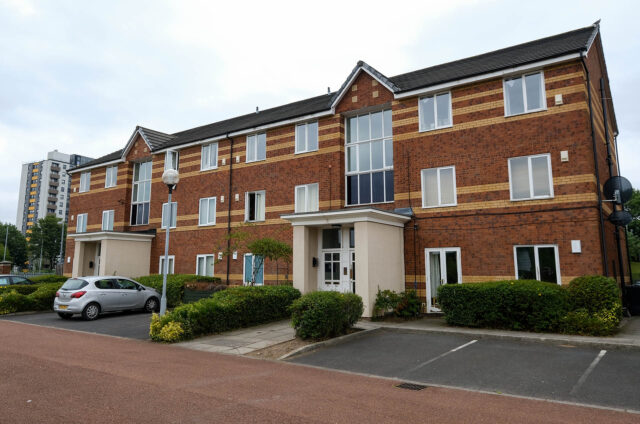
My lease
What a lease is, your responsibilities and what you can expect from us.

As a leaseholder or shared owner, you will be responsible for paying a service charge, rent and/or fees to Onward.
Click the topics here for more information.
At the beginning of each financial year, a service charge estimate will be sent to you. This estimate sets out the amount you will need to pay and explains how each charge has been calculated. The frequency of payments and services provided are based on the terms of your lease, and can include things like:
Later in the year, we will provide a set of accounts that detail the exact cost against your estimated service charges. The terms of your lease will outline whether any debit will be charged to, and whether any credit will be refunded to you or rolled into the budget for the next financial year.
If you are a shared owner, you will pay your mortgage lender for the share of the home you own, and the rest in rent to us. For example, if you own 20% of your home, you will pay 80% in rent.
Shared ownership rent is reviewed annually in line with your lease, and we will inform you of any increases. If you choose to buy more shares of your shared ownership home, the amount of rent you pay to us will be reduced accordingly.
Depending on your property, you may need to pay ground rent as set out in the terms of your lease.
If you’re an Onward Homes leaseholder, we will provide a bill for the ground rent you need to pay. If you’re a Contour Property Services leaseholder and the land your property sits is owned by a different company, they will contact you directly to recover any ground rent owed.
When setting budgets, we review the service charges you pay and take into consideration things like the actual expenditure from the previous year and current year to date, any known increases from our suppliers, property maintenance plans and any changes to legislation or services. This information is then used to prepare a service charge breakdown which will be issued to you prior to the new financial year beginning.
Throughout the year, we regularly review actual expenditure against estimates and will contact you regarding any large differences as required.
If you pay a variable service charge, at the end of each financial year we will reconcile the actual expenditure against the service charge estimate issued at the beginning of the year. We will then issue a set of accounts detailing the amount spent under each service charge heading.
If the actual expenditure is more than the estimate there will be a shortfall, known as a deficit. Depending on the requirements of your lease, we will either roll the balance over to the next year or issue a demand for payment.
If the actual expenditure is less than the estimate, there will be a credit, known as a surplus. Depending on the requirements of your lease, we will either roll the balance over to the next year or issue a refund.
If you pay a fixed service charge, we do not provide end-of-year accounts.
The purpose of a reserve fund is to build up a sum of money to cover the cost of irregular and/or expensive work such as decorating the outside of properties, carrying out structural repairs or replacing a lift.
These funds are held in a separate bank account and earn interest. If you sell your home, your contributions will stay in the fund and are not refunded. Some leases require contributions via the service charge, whereas others require contributions on exit. Some leases do not include the provision of a reserve fund.
In addition to the fees that you pay via a service charge, we also charge fees for additional activities, such as providing a copy of your lease agreement, reviewing permission requests and more. For more information on the fees we charge, please explore our guide to fees and charges.
Your account gives you an up-to-date overview of your balance and the payments you’ve made to Onward. You can view your account by visiting the My Onward Portal, or if you’d like to request a printed copy, please get in touch.
Here, you’ll find the different ways you can make a payment to us.
The easiest way to pay your rent and service charges is by setting up a direct debit. With a direct debit, your payments will be taken automatically from your bank or building society on a date you choose, so you never have to worry about forgetting to pay.
You can set up a direct debit by visiting the My Onward Portal, or getting in touch.
Easily pay your rent online through the My Onward Portal, where you can also view your rent account 24 hours a day, 7 days a week.
To pay your rent over the phone, please give us a call on 0300 555 0600. You will need your tenancy reference number, and a credit or debit card.
You can use our automated telephone payment service by pressing 1, or you can stay on the line to speak to us between 8am – 6pm Monday to Friday and 10am – 6pm on Wednesdays.
Payments can be made at your local Post Office, or any retail outlet that accepts AllPay. Simply take your payment card to the counter and make your payment. You will be given a receipt as proof of payment, which you should keep in a safe place.
If you do not already have a payment card and would like to request one, contact us.
When your payment is due, or if you miss a payment, we might send you a link to pay by email or text message. Paying by link makes things much quicker and easier. Simply follow your unique link to our payment portal, where you can make a secure payment with your credit or debit card. There is no need to enter your tenancy number or 19-digit AllPay reference number.
You may have already seen these links in messages from us. If not, you may start to see them in the future. If you ever feel worried or unsure about an email or text message from us, you can check this with us by getting in touch.
From April 2026, your rents will increase in line with the terms of your lease. Increasing rents means that we can continue to maintain and invest in improvements to homes, neighbourhoods and services. You may also see an increase in service charges, which cover the cost of services provided to your scheme, neighbourhood and personal charges in relation to your home.
Please take a look at the frequently asked questions below, which we hope will answer any questions you may have. If you have any other questions, please get in touch.
You pay rent on the share of your property that Onward own. Your rent is reviewed annually and increased in line with the terms of your lease.
Your new rent amount will be charged from 1st April 2026.
Once you’ve received the letter confirming your rent charges in February, you will need to inform the Department for Work and Pensions (DWP) of this via their online portal after the rent increase has been applied. You can do this by visiting the Government’s website.
It is important that you don’t do this until your rent has actually changed to make sure there are no issues with receiving your benefits, so you should do this on the day of or the days following your rent changing. If you do not manage your Universal Credit by the online portal, then you will need to contact the DWP by phoning the helpline on 0800 328 5644.
For support doing this, please contact our Money Advice team by calling 0300 555 0600 or emailing moneyadviceteam@onward.co.uk.
If your Housing Benefit is paid directly to you, then you will need to inform Housing Benefit of your new rent amount before 1st April 2026 to make sure you receive the correct payments. To do this you will need to contact your Local Authority and ask to speak to the Housing Benefit department. If your Housing Benefit is paid directly to Onward, you do not need to take any action. Onward will inform Housing Benefit of your new rent amount.
Your service charge covers the cost of services provided to your scheme, neighbourhood and personal charges in relation to your home.
The charge is calculated annually based on the cost of services you received for the previous year and estimated costs for the coming year.
We provide a service charge estimate which sets out what services are chargeable and what these cover. Please take a look at this and if you have any questions please do not hesitate to get in touch by calling 0300 555 0600 or by emailing homeownership-customeraccounts@onward.co.uk.
Some customers may see an increase in their budgets charges this year. We always work to ensure the best value for money for customers through competitive tender processes for all suppliers. However, the economy has been challenging in recent years and as a result we continue to see increases in the costs of delivering essential services, such as building safety and compliance.
We have brought some services inhouse, such as grounds maintenance, cleaning and waste management, which means that we can better control costs. We have also reviewed data to capture the full and accurate costs of delivering services, which means some customers may see changes in their service charges.
You only pay for the services that your lease requires us to provide and allows us to recover the cost of. In some cases, you may pay a different amount to another customer on the same site. An example of this could be where there are two blocks of apartments and one has internal communal areas which need to be maintained, and the other one doesn’t.
Our Onward Environmental team provides grounds maintenance, cleaning, window cleaning, and waste management service for most customers. Most internal communal areas are cleaned fortnightly, with some properties and sheltered schemes being cleaned more frequently. Window cleaning takes places usually every two months or as stated in your lease.
Grounds maintenance visits take place every two weeks. Litter picks are carried out on all visits. Grass is cut during the growing season, except in cases of extreme wet weather, and hedge and shrub reduction works are carried out from November to February. Some grassed areas, for example meadows, may be cut less frequently.
For those customers that receive a service from Onward Environmental, we will send a newsletter which sets out the services that we provide and when you can expect to receive these. If you have any questions about your grounds maintenance service, please get in touch. You can find out more by visiting our website or giving us a call.
If you think you will struggle to pay your rent, please let us know as soon as you can. Our Money Advice Team is here to help. You can get in touch with a member of the team by calling 0300 555 0600 or by emailing homeownership-customeraccounts@onward.co.uk.
Your Direct Debit will be adjusted automatically by our Customer Accounts Team – you don’t have to do anything. We may increase your Direct Debit by an additional amount on top of your usual payments if you are not paying fully in advance. However, if you make rent payments by Standing Order you will need to contact your bank to amend the amount before 1st April 2026.

If you miss a payment, or your financial position changes and you think you will struggle to pay, please let us know as soon as you can.
Here, you’ll find quick links to helpful information for leaseholders and shared owners.
What a lease is, your responsibilities and what you can expect from us.

Learn more about the fees and charges you may need to pay.

Everything you need to know about planned works and consultations.

Need to speak to us? We’re just an email or phone call away.
The information and advice on this website are a guide only. If there are any differences between this guide and your lease, the lease will always take precedence. It is important that you read your lease carefully, and if there is anything that you do not understand, we recommend that you take independent legal advice.