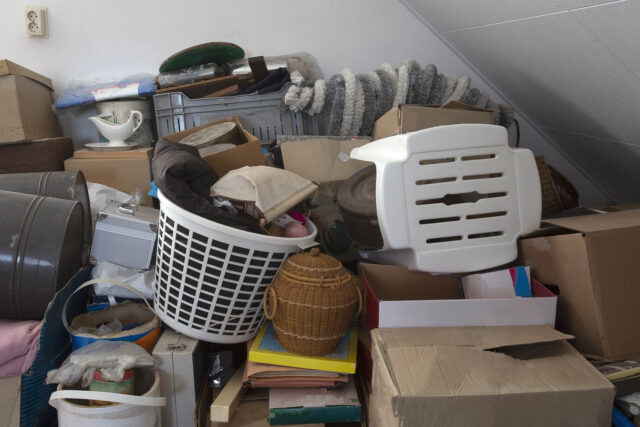
Help with hoarding
We’re here to help you with hoarding at your own pace.

We’re committed to providing high-quality services for our customers and communities. We understand that sometimes things don’t go as planned and when this happens, we want to put things right.
As part of our complaints process, we may offer compensation or other remedies. Our approach is in line with the Housing Ombudsman’s Complaint Handling Code and Compensation Guidance to ensure compensation and remedies are fair, consistent, and transparent.
Here, we explain when and how we consider compensation, what you can expect, and how to get in touch. You’ll also find a glossary at the end of this page, which explains some words or phrases that may be unfamiliar.
We consider compensation on a case-by-case basis. We may offer compensation or another remedy when:
We aim to put things right in a way that is fair and in line with the situation you have experienced. This may include:
While we assess each case individually, compensation is not normally offered when:
We also expect all customers to have contents insurance to protect personal belongings.
We do not have fixed amounts for compensation. Instead, we consider:
We use internal guidance to ensure our decisions are fair and consistent. In some cases, we may refer to the Housing Ombudsman’s benchmark amounts.
If you feel that our service has not met expectations, you can make a complaint or raise a concern by:
You can also find out more about our complaints process by reading our Complaint Resolution Policy. An easy-read version is also available.
If you have any questions or need additional support with a complaint, please get in touch by visiting the My Onward Portal, emailing customerservices@onward.co.uk, calling 0300 555 0600 or messaging 07418 344 603 on WhatsApp between 8am – 6pm Monday to Friday, and 10am – 6pm on Wednesdays.
You can also contact the Housing Ombudsman at any stage for free, independent advice by visiting their website, calling 0300 111 3000, or writing to The Housing Ombudsman Service, PO Box 1484, Unit D, Preston, PR2 0ET.

If you have any questions about our complaints service or approach to compensation, please do get in touch.
We offer a range of additional support for customers, from advice on how to manage your finances to help with hoarding.
We’re here to help you with hoarding at your own pace.

Get free, confidential advice from our Money Advice Team.

Get support and enhance your skills with training or volunteering.

Need to speak to us? We’re just an email or phone call away.
A clear and meaningful statement that acknowledges what went wrong, explains why it happened, and recognises the impact on you.
A financial payment or rent credit offered when our service has not met the standard you should expect and where this has caused distress, inconvenience, loss, or extra time and effort for you.
An expression of dissatisfaction about our services or actions, where a response or resolution is requested.
The formal way we review and respond to complaints, including investigating what happened, providing our findings, and putting things right where appropriate.
The Housing Ombudsman’s standards that all landlords must follow to ensure complaints are handled fairly, consistently, and transparently.
The upset, frustration, worry, or disruption caused when something goes wrong and affects your day‑to‑day life.
Important services in your home, such as heating, hot water, electricity, or sanitation, which are necessary for health, safety, and basic living.
A non‑financial action, such as flowers or a voucher, offered to recognise inconvenience or upset, where financial compensation may not be appropriate.
An independent service that provides free, impartial advice and investigates complaints about social landlords if issues cannot be resolved directly.
When a service you should reasonably expect is unavailable, delayed, or not delivered to the agreed standard.
Reasonable additional costs you have had to pay because of our service failure, for example extra heating costs or replacing damaged items, usually supported by receipts.
The action we take to put things right. This may include an apology, repairs, financial compensation, reimbursement of expenses, or other practical actions.
A form of compensation where money is credited directly to your rent account rather than paid to you.
When our services do not meet expected standards, agreed timescales, or our responsibilities to you.
Another organisation or individual not acting on our behalf, such as a utility provider.
Personal circumstances that may mean the impact of a service failure is greater, such as health conditions, disability, age, or other support needs.